
Antonio Aguilar
Mexican singer and actor who popularized charrería worldwide.

via Wikipedia: Antonio Aguilar · see source
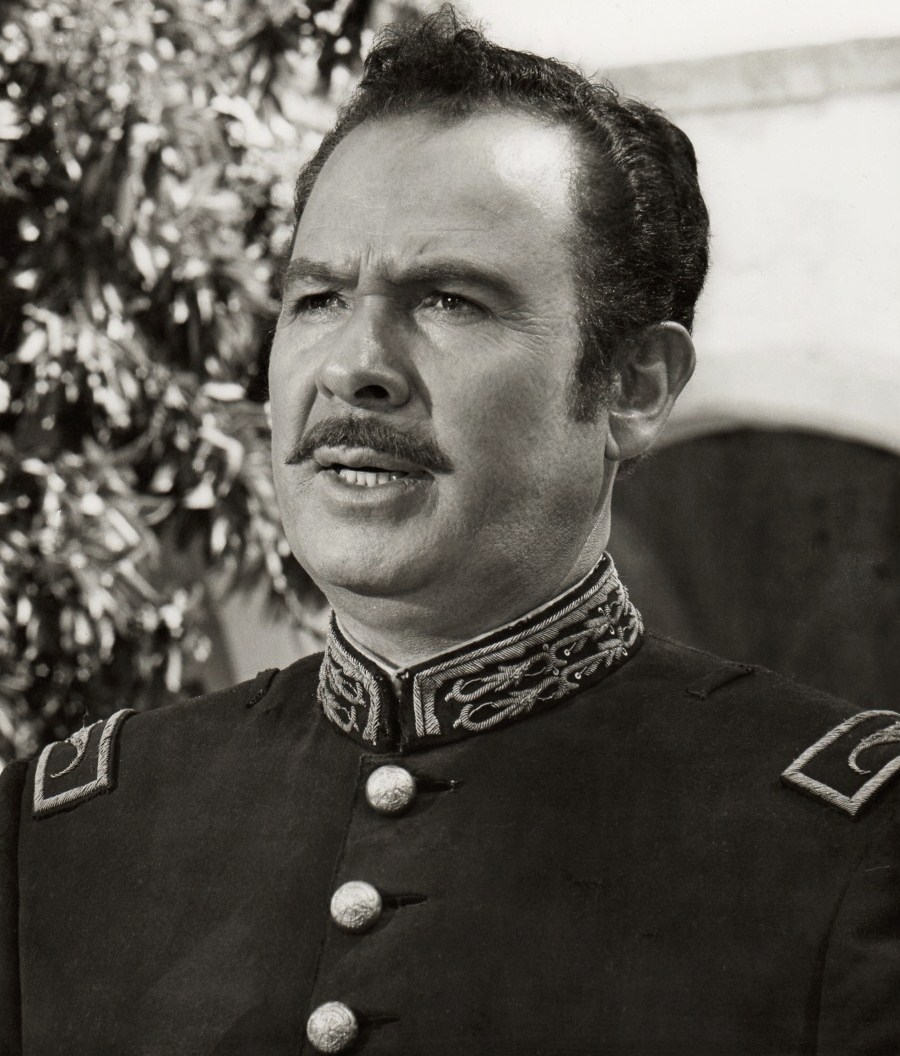
José Pascual Antonio Aguilar Márquez Barraza (17 May 1919 – 19 June 2007), known as Antonio Aguilar and credited as Tony Aguilar, was a Mexican singer and actor. He recorded over 150 albums, which sold 25 million copies, and acted in more than 120 films. He was given the honorific nickname 'El Charro de México' (Mexico's Horseman) because he is credited with popularizing the Mexican equestrian sport la charrería to international audiences.
- born
- 17 May 1919
- died
- 19 June 2007
- field
- Singer, actor
- nationality
- Mexican
- known_for
- Popularizing la charrería; over 150 albums and 120 films; only Hispanic artist t
Verified Timeline
Lore & Background
Aguilar began his career singing on Mexican radio station XEW in 1950. That year, he signed a contract with Mexican independent label Musart Records and became one of its best-selling artists. He made his acting debut with Pedro Infante in the drama Un rincón cerca del cielo (1952). After appearing in gentleman roles in several films, he achieved popularity as a film star with his performance as lawman Mauricio Rosales in a series of seven films in the mid-1950s. His success increased with his tours throughout Latin America and his studio albums, which included Mexican folk songs (rancheras) and ballads (corridos). In the 1960s, he focused on producing and starring in films set in the Mexican Revolution. In 1970, he won the Latin ACE Award for Best Actor for his portrayal of Emiliano Zapata in the 1970 epic film of the same name. He also portrayed Pancho Villa twice in film. Aguilar was the first Mexican performer to mix rodeos and concerts while touring his show in Latin America and the United States. His second wife was famous singer and actress Flor Silvestre, and they had two sons, Antonio Aguilar Hijo and Pepe Aguilar, who also became singers and actors. His family is known as 'la dinastía Aguilar' (the Aguilar dynasty).
Reader's Guide
Antonio Aguilar's significance lies in his dual impact on Mexican music and cinema, as well as his role in bringing the Mexican equestrian tradition of charrería to a global audience. With over 150 albums and 25 million records sold, he was a leading figure in ranchera and corrido music. His film career, spanning more than 120 movies, included iconic roles such as Emiliano Zapata and Pancho Villa, and he was awarded the Golden Ariel in 1997 for his contribution to Mexican cinema. Aguilar's 1997 six-night sellout at Madison Square Garden remains a unique achievement for a Hispanic artist. His legacy continues through his sons and the ongoing recognition of the Aguilar dynasty in Mexican entertainment.
Did You Know?
- Aguilar was the first Mexican performer to mix rodeos and concerts while touring his show in Latin America and the United States.
- He portrayed Emiliano Zapata in a 1970 epic film, winning the Latin ACE Award for Best Actor.
- In 1997, he became the only Hispanic artist to sell out Madison Square Garden for six consecutive nights.
- He was awarded the Golden Ariel in 1997 for his 'invaluable contribution and spreading of Mexican cinema'.
- His family, including his wife Flor Silvestre and sons Antonio Aguilar Hijo and Pepe Aguilar, is known as 'la dinastía Aguilar'.
Recording Career and Cinematic Rise
Antonio Aguilar launched his professional music career in 1950, first performing on the airwaves of Mexican radio station XEW before signing with the independent label Musart Records, where he became one of their most commercially successful artists. Over the decades that followed, he accumulated more than 150 studio albums that collectively moved 25 million copies worldwide. His catalog was anchored by corridos and rancheras, with standout tracks like "Gabino Barrera," "Caballo prieto azabache," "Albur de amor," and "Un puño de tierra" becoming fixtures of Mexican popular music. On the screen, Aguilar made his acting debut alongside Pedro Infante in the 1952 drama Un rincón cerca del cielo. After a string of gentleman roles, he broke through as the rural lawman Mauricio Rosales in a seven-film series produced by Rosas Films between 1955 and 1958. His profile rose further with Ismael Rodríguez's Tierra de hombres in 1956, and he went on to star in collaborations like La Cucaracha and Ánimas Trujano. By the 1960s he had shifted toward Mexican Revolution epics, and he even crossed into Hollywood, appearing in John Wayne's The Undefeated in 1969.
Defining Moments and Major Honors
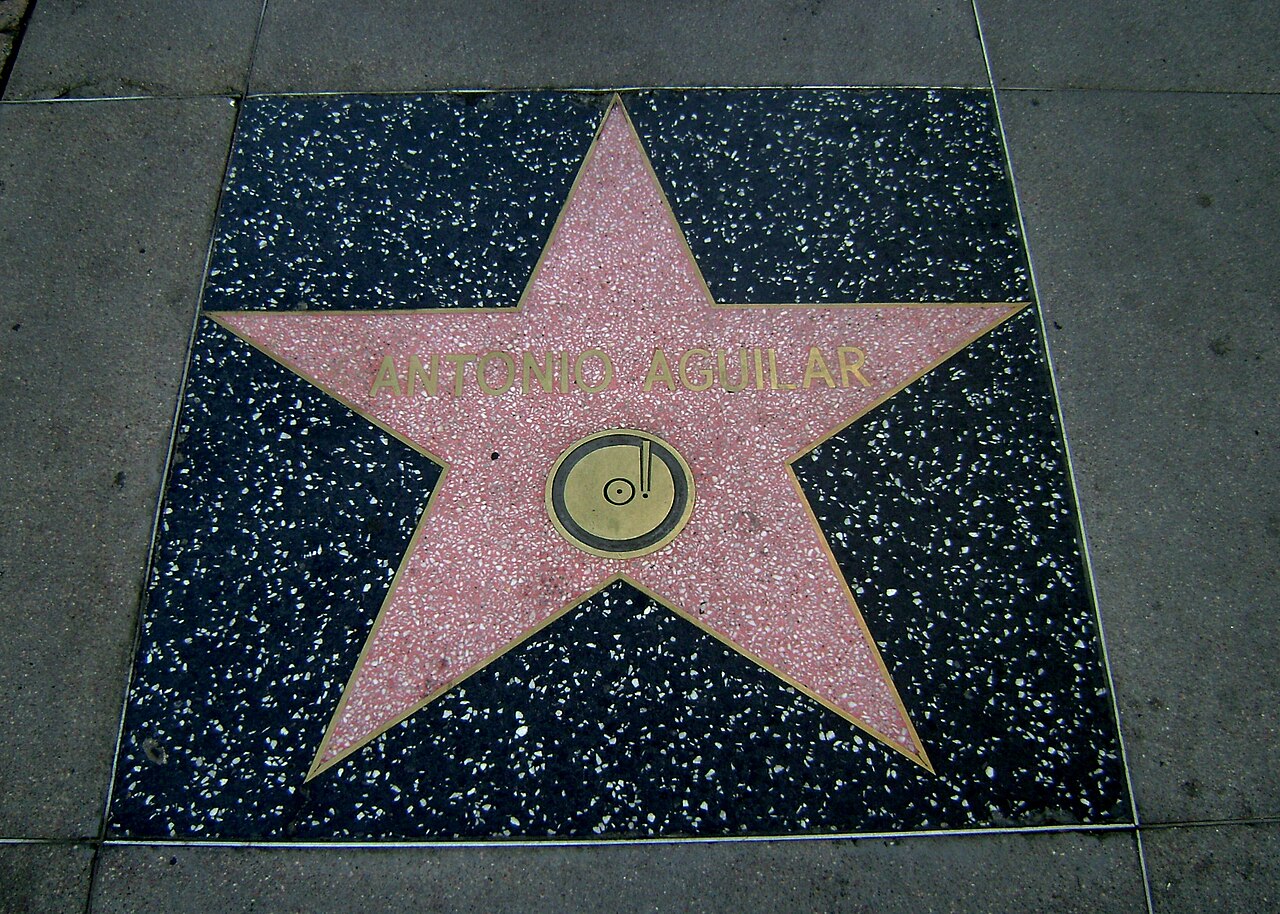
Several milestones set Aguilar apart from his peers. In 1970, his portrayal of revolutionary leader Emiliano Zapata in the epic film of the same name earned him the Latin ACE Award for Best Actor, a recognition that cemented his status as a serious dramatic performer beyond the ranchera genre. He also brought the figure of Pancho Villa to the screen on two separate occasions. Perhaps his most extraordinary live achievement came in 1997, when he became the only Hispanic artist in history to sell out New York City's Madison Square Garden for six consecutive nights. That same year, the Mexican film industry presented him with the Golden Ariel, citing his invaluable contribution to and spreading of Mexican cinema. The honors continued into the next decade: in 2000 he received a star on the Hollywood Walk of Fame at 7056 Hollywood Boulevard, the Excellence Award at the Lo Nuestro Awards, and the ASCAP Latin Heritage Award. Back in Mexico City, his handprints and a dedicated star were placed on the Paseo de las Luminarias, acknowledging his dual impact on both the recording industry and the silver screen.
Legacy and Cultural Impact
Aguilar's influence on Mexican culture extends well beyond his discography and filmography. He earned the honorific title "El Charro de México" — Mexico's Horseman — because he is widely credited with introducing the traditional equestrian sport of la charrería to international audiences, weaving it into his public persona and performances. He was also the first Mexican performer to blend rodeo events with concert shows during his touring circuits across Latin America and the United States, creating a spectacle that fused sport and music in a way no one had attempted before. His family legacy is equally remarkable: married to the celebrated singer and actress Flor Silvestre, he fathered two sons, Antonio Aguilar Hijo and Pepe Aguilar, both of whom went on to successful careers as singers and actors. Together, the three generations are affectionately known as "la dinastía Aguilar," a name that has become synonymous with Mexican popular entertainment. His 150-plus albums and 120-plus films remain a benchmark for sustained artistic output in the Latin entertainment world.
Early Life and Personal Journey
José Pascual Antonio Aguilar Márquez Barraza was born on 17 May 1919 in the small town of Villanueva, in the state of Zacatecas, Mexico. His parents, Jesús Aguilar Aguilar and Ángela Márquez Barraza Valle, were both natives of that same community, grounding him in a deeply regional Mexican identity that would later permeate his art. He was sometimes credited in international contexts under the shortened name Tony Aguilar. His personal life was marked by a high-profile marriage to Flor Silvestre, one of Mexico's most beloved singers and actresses of the mid-twentieth century. Their union produced two sons who would carry the family name into the next generation of entertainment. Aguilar's career spanned more than five decades, from his first radio appearances in 1950 through his final honors in the early 2000s. He passed away on 19 June 2007, leaving behind a body of work that touched virtually every corner of Mexican popular culture — from the ranchera ballad to the epic Revolution film, from the local radio booth to the grandest stages in New York.
Gallery
Frequently Asked Questions
Who is Antonio Aguilar?
Antonio Aguilar (1919–2007) was a Mexican singer and actor widely regarded as one of the country's most beloved cultural figures. He recorded under the name Tony Aguilar and became synonymous with Mexican folk tradition.
What is Antonio Aguilar's nickname and where does it come from?
He was called 'El Charro de México' (Mexico's Horseman) because he brought the traditional equestrian sport of la charrería to a global audience. The title recognized his role in turning a regional practice into an internationally recognized art form.
How prolific was Antonio Aguilar's career?
Aguilar released more than 150 albums that collectively sold around 25 million copies and appeared in over 120 films. His dual success in both recording and cinema made him one of the most commercially prominent Mexican entertainers of the 20th century.
Why is Antonio Aguilar important to Latin music history?
He is credited as the only Hispanic artist to bring la charrería to international prominence, effectively making a Mexican equestrian tradition a worldwide cultural export. His decades of recordings and films also cemented a distinctly Mexican musical and cinematic identity.
When and where was Antonio Aguilar born and when did he die?
He was born José Pascual Antonio Aguilar Márquez Barraza on 17 May 1919 in Mexico and passed away on 19 June 2007. His nearly nine-decade life spanned major shifts in Mexican popular culture, during which he remained a constant presence.
More in Latin Music Icons 1-24
Spotted an error? Know more?
This is a living reference — every entry is fact-audited, and reader corrections feed straight into our audit queue. Suggest an edit · See this site's audit record